Who is Abdul Karim Telgi?
Abdul Karim Telgi was an Indian counterfeiter who became infamous as the mastermind behind India’s fake stamp paper scam, one of the country’s biggest financial fraud cases. He was born on 29 July 1961 in Khanapur, Belgaum district, Karnataka, and later built a nationwide network for printing and selling counterfeit stamp papers. His case shocked India because the fake documents reportedly entered banks, insurance companies, brokerage firms, and government-linked systems.
Telgi’s life story drew massive public attention because it looked almost unbelievable. He came from a modest background, sold fruits and vegetables in his younger years, completed a commerce degree, moved to Saudi Arabia for work, returned to India, and then entered illegal document rackets. From there, he moved into fake passport operations and later the much larger stamp paper counterfeiting business that made him one of India’s most notorious fraud figures.
Even after his death in Bengaluru on 23 October 2017, the scandal linked to his network did not fully disappear. Court cases connected to the wider stamp paper scam continued for years, including a Delhi High Court development in February 2026 allowing trial to proceed against accused linked to the counterfeit stamp network.
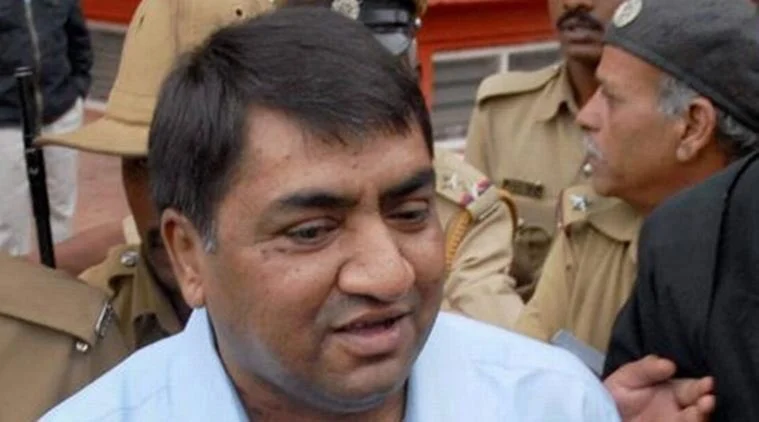
| Field | Details |
| Full Name | Abdul Karim Ladsaab Telgi |
| Popular Name | Abdul Karim Telgi |
| Profession | Counterfeiter, Fraudster |
| Famous For | Mastermind of India’s fake stamp paper scam |
| Date of Birth | 29 July 1961 |
| Birthplace | Khanapur, Belgaum district, Karnataka, India |
| Nationality | Indian |
| Father | Ladsaab Telgi |
| Mother | Shariefa Bee Telgi |
| Education | B.Com |
| College | Gogte College of Commerce, Belgaum |
| Marital Status | Married |
| Wife | Name not widely confirmed in reliable public sources |
| Children | At least one daughter mentioned in public reports |
| Death Date | 23 October 2017 |
| Death Place | Bengaluru, Karnataka, India |
| Cause of Death | Reported cardiac arrest amid serious illness |
| Criminal Charge | Stamp paper counterfeiting and related offences |
| Penalty | 13 years rigorous imprisonment in a major case |
Abdul Karim Telgi Early Life
Abdul Karim Telgi was born in Khanapur in present-day Karnataka. He came from a lower middle-class family that struggled financially. His father, Ladsaab Telgi, worked as a Class IV employee in the Indian Railways. The family’s economic condition became even harder after his father died when Abdul Karim was still young. That loss deeply shaped his early life.
Because of the family’s situation, Telgi and his brothers reportedly helped support the household from an early age. Public accounts say he sold fruits and vegetables on trains to pay for his studies and contribute to the family income. This part of his story is one reason people often describe his life as a dramatic rise from poverty to criminal wealth.
Despite the hardship, he continued his education. He studied at Sarvodaya Vidyalaya, Khanapur, an English-medium school according to public biographies. His ability to continue education while doing small-scale work showed that he was ambitious and determined from a young age. However, that ambition later moved in a deeply unlawful direction.
His early life is often discussed because it creates a strong contrast with what he later became. He did not come from wealth or political power. Instead, he came from struggle, and this makes the scale of the later scam even more striking.
Abdul Karim Telgi Education
Abdul Karim Telgi completed his schooling in Khanapur and later studied at Gogte College of Commerce, Belgaum. Public biographical records say he completed his B.Com in 1984. This is an important detail because it shows he had formal commerce education and was not uneducated or unaware of financial systems.
His commerce background may have helped him understand how documents, transactions, and official instruments worked. That knowledge likely became useful later when he moved into fake documentation and stamp paper counterfeiting. This connection is an inference based on his education and later activities, not a direct admission from him.
After graduation, he reportedly moved to Saudi Arabia for work. Public accounts say he stayed there for several years before returning to India. This foreign work phase did not make him publicly famous, but it forms an important bridge between his ordinary early life and his later illegal career.
So, in educational terms, Telgi had enough formal training to build a normal professional career. Instead, he used his skills and experience in a criminal enterprise that eventually spread across multiple Indian states.
Abdul Karim Telgi Family
Abdul Karim Telgi belonged to a modest family.
Father
His father was Ladsaab Telgi, an employee of the Indian Railways. His early death left the family in financial trouble.
Mother
His mother was Shariefa Bee Telgi, who appears in public biography accounts as a central figure in the family’s difficult early years.
Siblings
Public accounts mention that Abdul Karim Telgi had brothers, and one source specifically notes he was the second of three sons.
Wife and Daughter
Telgi was married, but his wife’s name is not consistently confirmed in reliable mainstream public sources. A Times of India report published after his death said he was survived by his wife and a married daughter. Because the detailed family names are not strongly verified in the sources I checked, it is safer not to overstate them.
His family life stayed much less visible than his criminal identity. Most public coverage focused on the scam, court action, and police investigation rather than his personal relationships.
Abdul Karim Telgi Career
Early Career
After completing his studies, Telgi reportedly moved to Saudi Arabia for work and returned to India several years later. Once back, he entered the world of travel and manpower services. Public biographical material says he opened a company called Arabian Metro Travels in New Marine Lines, Mumbai. Through this business, he arranged labor movement to Gulf countries.
At this stage, his work became linked with forged and manipulated travel documents. Reports say he was involved in creating fake supporting papers for laborers whose passport or emigration documents had issues. This was part of what later pushed him into document fraud on a bigger scale.
Entry into Crime
Telgi’s criminal career first became visible through fake passport and immigration-related fraud. Public records indicate that he was arrested in the early 1990s in such cases. During that phase, he reportedly came into contact with people who understood how official papers were issued, transported, and misused. That knowledge appears to have opened the door to a much larger fraud opportunity. This is partly inference, but it fits the documented transition in his criminal activity.
The Stamp Paper Scam
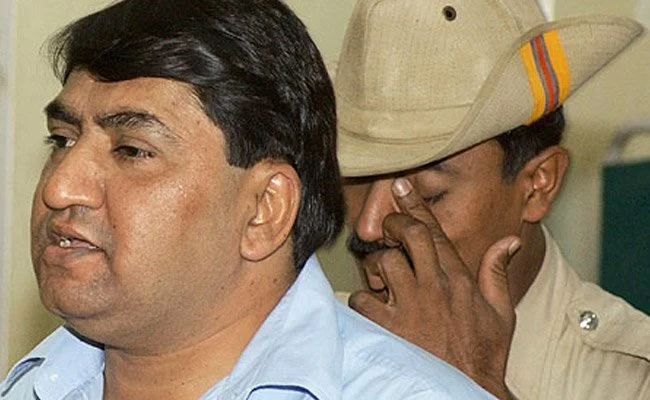
The turning point in Telgi’s life was his move into counterfeit stamp paper printing and circulation. Stamp papers are official government-issued papers used for legal and financial transactions. Because they are required in property deals, agreements, insurance, banking, and other formal processes, they have high value and wide demand. Telgi exploited this system by manufacturing and distributing fake stamp papers on a huge scale.
Public accounts say he built a vast distribution network and appointed hundreds of agents to sell counterfeit stamp papers to bulk buyers, including banks, insurance companies, and stock brokerage firms. The scam spread across many states and reportedly involved corruption and collusion by officials and law enforcement personnel. That institutional involvement made the fraud even more serious and harder to detect quickly.
The estimated size of the scam has often been described in reports as running into thousands of crores, with some public accounts popularly citing figures around ₹30,000 crore or more. Because estimates vary and not all numbers are equally official, it is safer to describe it as one of India’s largest financial frauds rather than rely too heavily on one exact amount.
Investigation and Conviction
As investigations widened, Telgi was arrested and prosecuted in multiple cases. A Karnataka-linked case summary notes that he was accused of large-scale manufacture, sale, and circulation of fake stamps and stamp papers under various sections of the Indian Penal Code. He was eventually convicted in major cases and sentenced to 13 years of rigorous imprisonment in one of the central outcomes associated with the scam.
Even after his conviction, the wider legal aftermath continued for many years because the racket involved multiple accused, states, and connected transactions.
Ongoing Legacy of the Scam
Abdul Karim Telgi died in 2017, but the scam did not end with him in legal terms. A Delhi High Court order dated 17 February 2026, reported on 21 February 2026, found sufficient material to proceed against two accused brothers, allowing trial to continue in a case linked to circulation of counterfeit government stamps. A separate 31 December 2024 clipping carried by CBI media coverage also reported jail terms for five accused in another bogus stamp paper case. These updates show how long the shadow of the Telgi network has lasted.
Abdul Karim Telgi Personal Life
Abdul Karim Telgi’s personal life is not as well documented as his criminal career. Public reporting confirms that he was married and had at least one daughter. Beyond that, reliable public information is limited.
What is clear is that he lived a double life in the public imagination. On one side, he came from poverty and had an ordinary beginning. On the other side, later accounts described him as someone who accumulated enormous wealth, properties, and bank accounts during the scam years. Some retrospective reports described his lifestyle as extravagant, though exact asset descriptions vary across sources and should be treated carefully unless court-supported.
Because much of the public fascination around Telgi came from his criminal network, his private habits, hobbies, and day-to-day personal preferences are not strongly documented in reliable sources.
Abdul Karim Telgi Controversy
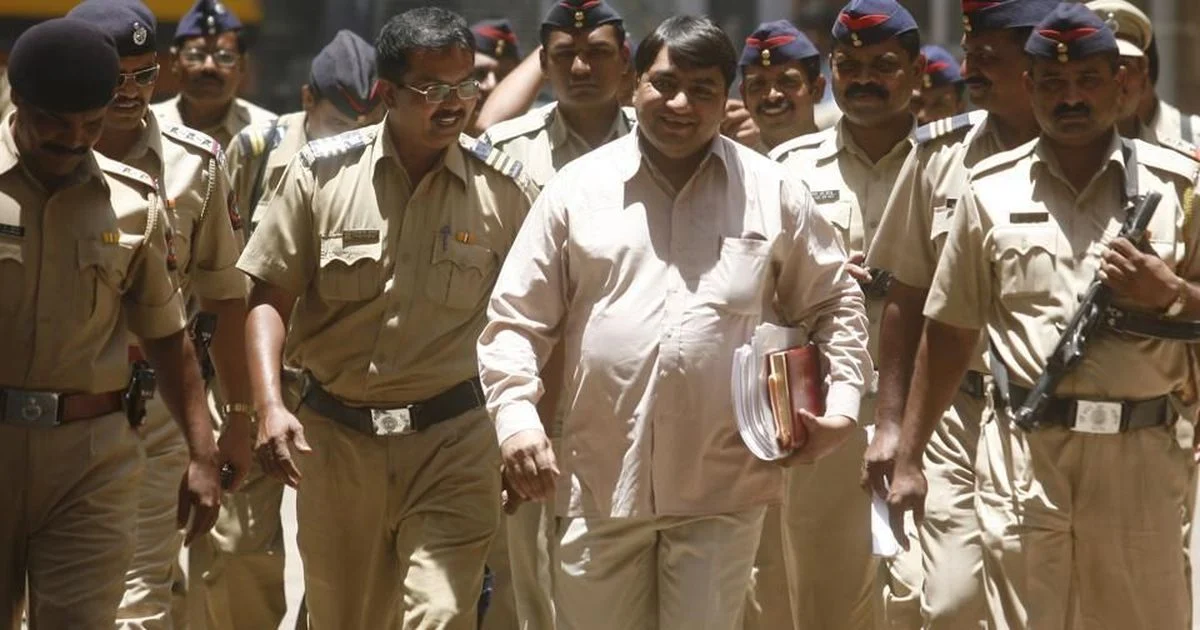
In Telgi’s case, controversy is not a side note — it is the central reason he became known.
He was the main face of the fake stamp paper scam, a case that became symbolic of large-scale fraud, document counterfeiting, and corruption in India. The scandal was especially alarming because it was not just about one man printing fake papers. It allegedly involved networks of agents, officials, and systemic loopholes that allowed counterfeit documents to circulate into formal institutions.
Even after his death, court-linked developments continued, showing that the scandal’s legal impact was far bigger than one individual case.
Abdul Karim Telgi Social Media
| Platform | Handle | Status |
| Not applicable | No official public presence | |
| X / Twitter | Not applicable | No official public presence |
| IMDb | Not applicable | Not an entertainment personality |
Since Abdul Karim Telgi was a criminal figure from an earlier era and died in 2017, there is no known official social media presence to include.
Abdul Karim Telgi Net Worth
| Source | Details |
| Legal income | Early manpower/travel business |
| Illegal income | Counterfeit stamp paper racket |
| Public claim | Scam linked to huge illicit earnings |
| Exact net worth | Not officially confirmed in reliable public sources |
Abdul Karim Telgi Physical Appearance
| Feature | Details |
| Height | Not officially confirmed |
| Weight | Not officially confirmed |
| Eye Color | Not officially confirmed |
| Hair Color | Not officially confirmed |
| Appearance | Commonly seen in archived news photos and court-era coverage |
Interesting Facts About Abdul Karim Telgi
- Abdul Karim Telgi was born on 29 July 1961 in Khanapur, Karnataka.
- He sold fruits and vegetables on trains during his younger days to support his education.
- He completed a B.Com from Gogte College of Commerce in 1984.
- Before the stamp scam, he was linked to fake passport and travel-document fraud.
- He ran Arabian Metro Travels in Mumbai after returning from Saudi Arabia.
- He built a network of hundreds of agents to distribute fake stamp papers.
- He died in Bengaluru on 23 October 2017 while serving sentence-related custody.
- Cases linked to the wider Telgi scam were still seeing court movement in 2024 and 2026.
FAQs About Abdul Karim Telgi
Q1. Who was Abdul Karim Telgi?
Abdul Karim Telgi was an Indian counterfeiter known as the mastermind behind the fake stamp paper scam.
Q2. When was Abdul Karim Telgi born?
He was born on 29 July 1961.
Q3. Where was Abdul Karim Telgi from?
He was from Khanapur, Belgaum district, Karnataka, India.
Q4. What was Abdul Karim Telgi famous for?
He became infamous for running a large counterfeit stamp paper scam across India.
Q5. What was Abdul Karim Telgi’s education?
He completed a B.Com from Gogte College of Commerce, Belgaum.
Q6. Was Abdul Karim Telgi married?
Yes, public reporting after his death said he was survived by his wife and a married daughter, though detailed family names are not strongly confirmed in the sources used here.
Q7. When did Abdul Karim Telgi die?
He died on 23 October 2017 in Bengaluru.
Q8. Is there still recent news related to the Telgi scam?
Yes. Court action connected to the wider network continued into 2024 and 2026, including a Delhi High Court development allowing trial to proceed against accused in a linked fake stamp case.
Read more biographies and success stories of business leaders, celebrities, healthcare professionals, etc. at Leader Biography.